Blog · Pharma and life sciences
Route early signals to a seat before the shortlist forms
Funding rounds, new leaders and hiring clusters come before the shortlist. Route each to a named rep the same day, with the seat it opens and one dated action.
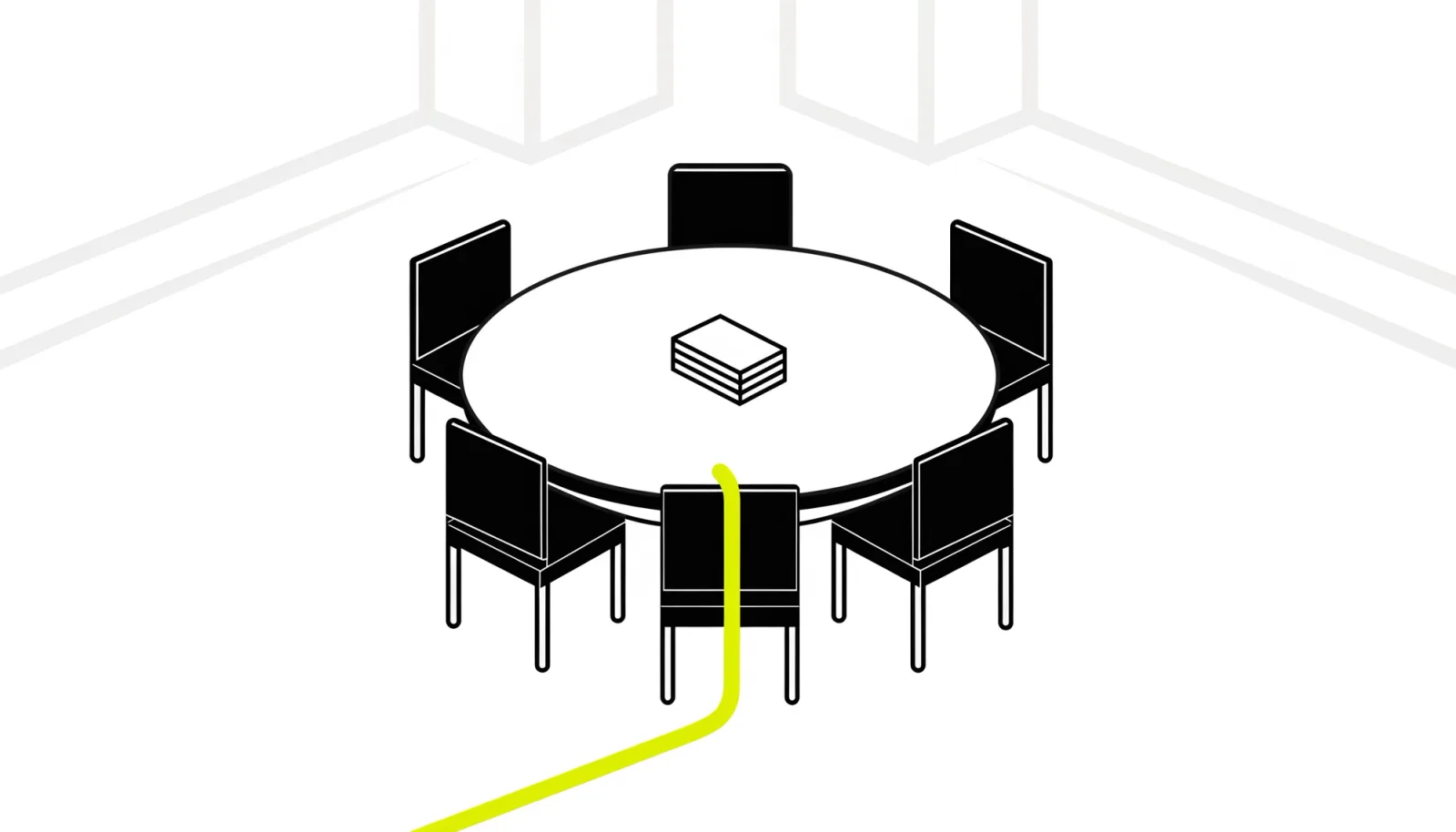
after the first participant enrols: the deadline to register a covered US trial
National Institutes of HealthWhy do we keep arriving after the vendor decision?
Because a public record usually confirms a buying decision rather than opening one. Most buyers rank their vendors before they talk to any of them.
In 6sense’s 2025 survey of nearly 4,000 buyers, 94% had ordered their shortlist by preference before engaging a seller↗. They bought from one of the 4 vendors on their Day One shortlist 95% of the time↗. Buyers also made 79% of first contacts themselves↗.
Most buyers have ranked their vendors before they talk to any of them.
Data behind this chart
| Item | Value |
|---|---|
| Ordered their shortlist by preference before engaging a seller | 94% |
| Bought from one of the 4 vendors on their Day One shortlist | 95% |
| Made the first contact with a seller themselves | 79% |
Some markets write the lag into law. A covered US clinical trial can be registered as late as 21 days after its first participant enrols↗. By then its sites, data systems and any CRO are in place. A vendor working from the registry is reading about a decision someone else won.
Early, then, means before the buyer has a favourite. The events that show a decision forming are your early signals. Each is worth something only if it reaches the right person in time.
Which early signals open a seat before the shortlist?
A funding round, a new leader in the seat that chooses and a hiring cluster each open a seat on the buying panel before the shortlist forms. So do a milestone that commits the next project and a partner’s award. A seat is a buying role, such as the budget owner or the person who will run the project, whoever holds it↗.
Pairing the signal with its seat tells the rep who to reach and why now. Without the seat, an alert says only that something happened.
| Early signal | Seat it opens | Same-day action |
|---|---|---|
| Funding round or approved budget that names a project | The budget owner, often the CEO or CFO, and the project’s sponsor | Find who will run the project and ask a customer in that role for an introduction |
| New leader in the seat that chooses | That seat, with a new holder | Mark the old holder as left, add the new one and send a short note without a pitch |
| Hiring cluster: 3 or more related roles in 30 days | The team under the leader, who will write the requirements | Put each role on the map and find who owns the requirements |
| Milestone that commits the next project, such as a phase move or a won contract | The owner of the problem you solve | Send that seat a point of view on the next project |
| Partner award to an integrator, a consultant or a CRO | An outside seat: the partner’s lead | Give the partner’s lead an owner on your side and link both accounts |
| Registry entry, or a request for proposals you weren’t sent | Usually none: the shortlist has formed | Log the date and set a look-again date for the next decision |
Keep to events you can date and link to a public source, such as the company’s own announcement, a filing or a job post. An alert without a date or a link can’t be checked, so it isn’t a signal.
Seats also sit outside the account. Forrester counts 9 external influencers beside 13 internal stakeholders in a typical buying decision↗. Some buyers hire a partner that brings its own tools, such as an integrator or a CRO. Give the partner’s lead a seat and an owner of their own.
A new leader changes a seat, so change the record. Mark the old holder as left and keep them, add the new holder in the seat and recount the account’s coverage↗. The account may just have lost its only engaged seat. A hiring cluster adds seats too: we start at 3 related roles posted within 30 days, and each role goes on the map↗.
Then check that the account is still early. Take the buyer’s deadline and subtract the median time your won deals took from selection to go-live. That is the latest date the buyer can pick a vendor, and the shortlist forms before it. In the first two-way exchange, ask when the project must be live, who else the buyer has spoken to and whether anyone has been asked for a proposal.
Record the window as open, forming or closed, with its date↗. A closed window moves the account to its next decision, with a date to look again.
How do you make sure reps act on a signal the same day?
Make every signal a task: the same working day, the account’s owner gets the signal, the seat it opens and one action with a due date. The task holds the signal with its source link and the seat with its status: engaged, named or empty. It also holds the action, its due date and the window.
Match the signal to the account on an identifier, such as a website domain or a company register number, never on a name. An account without an owner goes to a named fallback. A shared channel is never the owner.
- 01Step 1
Record the signal
The account, the signal type, the event date and a link to the source. No source, no signal.
- 02Step 2
Match it on an identifier
A website domain or a company register number, never a company name typed by hand.
- 03Step 3
Name the seat
The buying role the signal opens, and whether that seat is engaged, named or empty.
- 04Step 4
Assign one owner
The account’s owner, or a named fallback when there is none. A shared channel never owns a signal.
Same working day - 05Step 5
Make the first human touch
An introduction request, a call with a documented reason, a letter or an email where the law allows it.
Within 1 working day - 06Step 6
Escalate or record
No touch after 2 working days goes to the owner’s manager. Every outcome records the seat and the window: open, forming or closed.
After 2 working days
The first human touch is due within 1 working day. It can be an introduction request, a call with a documented reason, a letter or an email where the law allows it.
Advertising email to German recipients needs prior express consent, signal-based or not, outside the narrow existing-customer exception↗. A German appeal court has held that LinkedIn messages count as electronic mail too↗. Check the rules where your buyers sit; this isn’t legal advice.
With no touch after 2 working days, the task goes to the owner’s manager↗. The rule is easy to meet, because the system does the routing and a person only has to act.
Write the action for the seat the signal opened. A budget owner hears about cost and timing, the person who will run the project about their next milestone and a partner about its bid. A congratulations note on a funding round says nothing to any of them.
Our audit check S2 scores the median time from a signal to the first human touch↗. Under 24 hours scores 5, 2–7 days scores 3 and over 14 days scores 1↗. One AI answer to this question suggests engaging within 5 working days↗, which would score 3. None of the 3 pages our weekly tracker found AI answers citing for this question gives reps a deadline↗.
Check S4 scores the share of alerts followed by an activity within 7 days↗. Under 10% scores 1, and over 75% scores 5 only with a named owner and a weekly review↗.
How do you know the signals got you in before the shortlist?
Count the required seats you had engaged on the day each buyer shortlisted, and compare that with last year. Engaged means a two-way exchange with the seat’s holder in the last 90 days: a call, a meeting or a written reply to a question you asked↗. Opened emails and accepted connection requests don’t count.
Report 3 numbers each month, per signal type↗:
- median hours from a signal to the first human touch
- share of signals followed by an activity within 7 days
- required seats engaged on the shortlist date, as a share of required seats
The baseline is the same 3 numbers for the last 12 months of decisions, rebuilt from the CRM before anything changes. Where you never learned the shortlist date, use the date the request for proposals went out or the choice was announced. Log a decision you heard of only afterwards as closed, so the baseline shows how often you arrive late. Then review open signal tasks with each owner every week, oldest first.
Compare signal types on the third number. A type whose accounts rarely have an engaged seat by the shortlist date is one to drop, however many alerts it sends.
Counting accounts hides the difference that matters. One AI answer measures the share of accounts engaged before vendor selection↗. By that count, an account where one analyst replied looks the same as one where the project lead, finance and the integrator are engaged. Seats show whether the people who choose and approve knew you before the list was written.
Which signals fire earlier at a clinical-stage biotech?
At a clinical-stage biotech, 5 signals fire before vendors are picked. They are a financing round that names a trial start, a new head of clinical operations, clinical hiring, an IND filing (the US application to test a new drug in people) and the CRO award. The registry entry comes last. By our estimate the panel is 3–5 people plus the CRO: clinical operations usually chooses the stack and the CEO and finance approve the spend↗.
In CRO-run studies the CRO’s systems team often brings its own tools into the bid, so the CRO is a seat with its own owner↗.
| Signal at a clinical-stage sponsor | Seat it opens | When it fires |
|---|---|---|
| Series A, B or C that names a trial start | The CEO and CFO, who now hold a budget | Purchases tend to follow 1–6 months after close (Panelhop estimate, Illustrative) |
| New VP or head of clinical operations | Clinical operations, the seat that chooses, with a new holder | The leader’s first months, while they review the CRO and systems (Panelhop estimate) |
| Clinical trial manager, clinical research associate and data manager job posts | Clinical data management and the study team | While the study team is being hired |
| IND filed or cleared | Clinical operations, and the CRO once it is named | The IND takes effect 30 days after FDA receives it, unless FDA puts the study on hold |
| CRO award or partnership | The CRO’s clinical systems lead, an outside seat | At the CRO bid, which often brings the CRO’s own tools (Panelhop estimate) |
| ClinicalTrials.gov registration | None for this study: log the sponsor’s next protocol | Up to 21 days after the first participant enrols, for trials the US rule covers |
First patient in dates the window: by our estimate, purchases tend to follow a financing round by 1–6 months↗. An IND takes effect 30 days after FDA receives it, or sooner on FDA’s notice, unless FDA puts it on clinical hold↗. So an announced IND filing means the first dose can be a month away↗. If your selection-to-live time is longer, assume that study’s shortlist has formed until the first call shows otherwise.
A worked example, Illustrative: a fictional EDC vendor sees a fictional sponsor close a Series B that names a Phase 2 start↗. On day 0 the alert reaches the account owner with 2 seats: the CFO, now holding a budget, and clinical operations, empty on the vendor’s map. On day 1 the owner asks a customer’s head of clinical operations for an introduction. On day 9 the sponsor posts 3 clinical roles, a data manager among them, and the data management seat goes on the map.
On day 16, on a first call, the VP of clinical operations puts first patient in at month 7. With its median of 3 months from selection to live, the vendor puts the sponsor’s latest choice at month 4. On day 50 the sponsor names its CRO, and the vendor’s partner manager takes the CRO’s systems lead. When the sponsor shortlists in month 3, the vendor has 4 of its 5 required seats engaged; only QA is still to reach↗.
Arriving late is a routing problem, not a list problem
We think most teams that arrive after the decision already see enough signals. What fails is the route from the signal to a person who acts on it. Funding news, appointments and job posts reach every vendor in a market on the same morning. What separates vendors is the next working day: whether a named rep knows which seat changed and does one useful thing about it.
That is why we would fix routing before buying another feed. A feed that pours into a shared channel adds alerts nobody owns, and nobody notices when they wait. An outbound agency that sends more email on the same signals adds volume to the same leak. In our view, a signal that doesn’t reach a rep with an action the same day is wasted spend.
We don’t say signal data is useless, or that speed alone wins. A same-day touch helps only when it reaches the seat the signal opened and says something about that seat’s next decision.

In practice
How we do it at Panelhop
In a Panel Check (GTM audit · 2–3 weeks), we measure from your CRM how long signals wait for a first human touch and what share of alerts anyone acts on, and set that as the baseline. Leak Fix (we build the fixes) then builds the routing in your own HubSpot or Salesforce: the match on an identifier, the seat on every alert, owner and escalation rules with a fallback and the report of seats engaged before each shortlist.
For eClinical vendors, Signal Desk (in-market accounts, weekly) tracks Series B rounds, new clinical operations leaders, clinical hiring, study starts and CRO awards at the sponsors on your list. Each account reaches your CRM with the signal, the seat it opens and a short brief for its owner, after a person has checked the batch, and your reps make every first touch. Panel Ops (we run it monthly) raises unworked alerts in the weekly signal review and reports seats engaged before each shortlist against the baseline.
Questions buyers ask about this
We keep finding trials on ClinicalTrials.gov after the CRO and vendors are chosen. Which signals fire earlier at clinical-stage biotechs?
A financing round that names a trial start, a new head of clinical operations, a cluster of clinical and data management hires, an announced IND and the CRO award all come before the registry entry. A covered US trial can be registered up to 21 days after its first participant enrols. Route each signal the same working day to the seat it opens: finance, clinical operations, data management or the CRO’s systems lead.
Is there an agency that runs signal-based outbound for eClinical vendors, tracking Series B rounds, new VP clinical operations hires and study starts at biotechs?
Yes: some life sciences lead generation agencies build outbound on funding rounds, phase moves and leadership changes, and signal software does the tracking for in-house teams. Before you hire one, check that each signal lands in your CRM with a named owner and the seat it opens, and that the report counts seats engaged before the vendor decision rather than emails sent. Email to German recipients also needs prior consent, signal or not.
How fast should a rep act on a funding round or a new hire?
Route it the same working day and make the first human touch within 1 working day: our audit scores under 24 hours from signal to first touch as 5 of 5. Speed helps only if the touch reaches the seat the signal opened, with a reason that fits that seat.
What should we do when the shortlist has already formed?
Record the window as closed, with its date, and move the account to its next decision: the next project, phase, renewal or protocol. Keep the seats you mapped and engage them before that decision forms. The miss also goes into your baseline, so you can see whether you arrive earlier next quarter.
Who owns the signal when a partner, such as a CRO or an integrator, is involved?
Route it to both owners, the buyer’s account owner and whoever owns the partner relationship, with the two accounts linked. Name one of them as the lead on the task, so the buyer hears from one person. Each records the seat they engaged, so coverage counts both.