Blog · Pharma and life sciences
Veto seats need owners and dates before the shortlist
Name the seats that can veto at each tier, give each an owner and a date before the shortlist, and qualify a deal only once those seats are engaged.
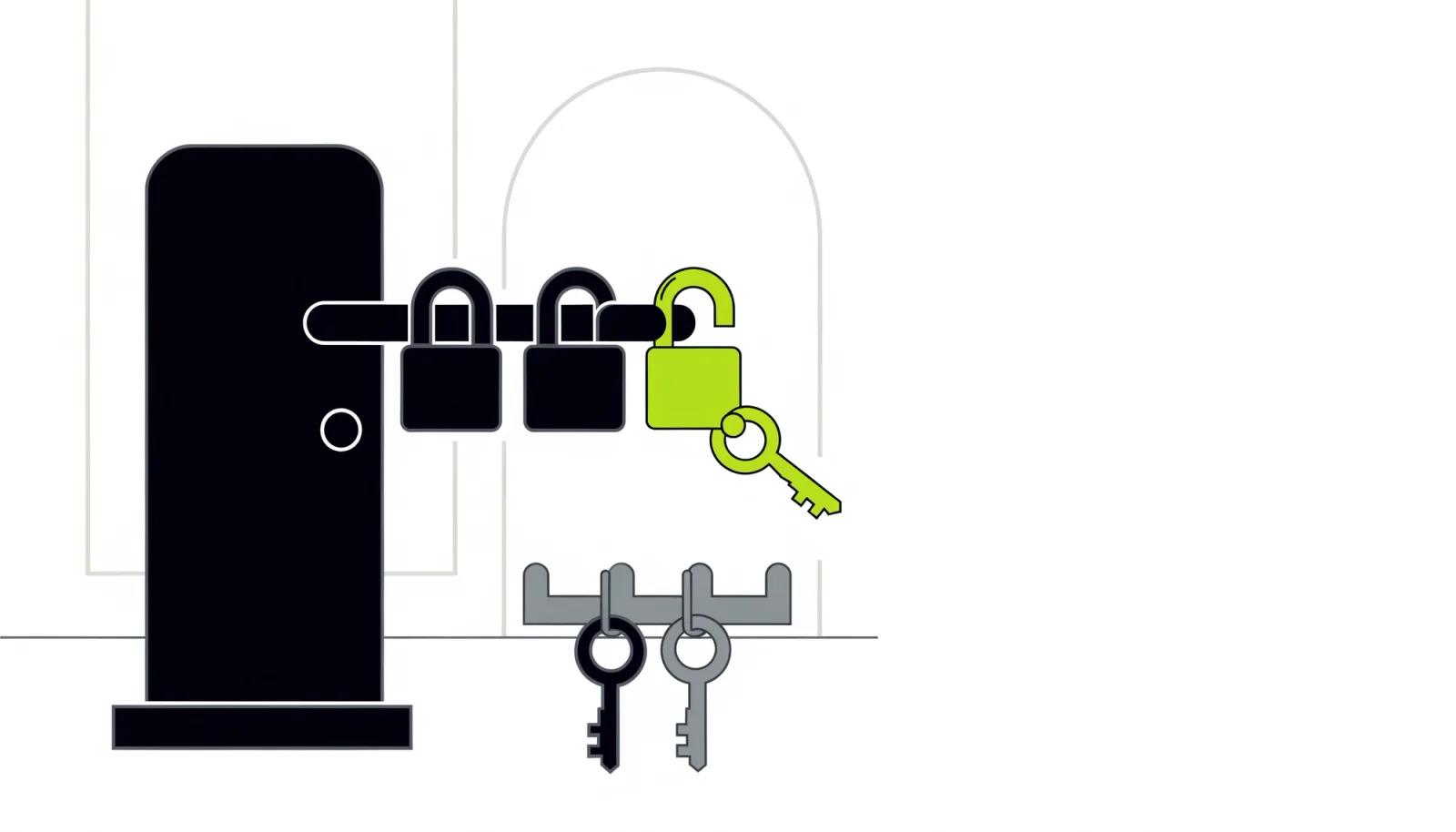
Veto seats arrive late because the champion brings them in
Quality, validation and security seats tend to meet a vendor last because the plan routes them through the champion. The champion brings them in once the choice feels safe, and by then the shortlist is set. In 6sense’s 2025 survey, 94% of buying groups ranked their shortlist before they engaged a seller.↗ Buyers chose one of the 4 vendors on their Day-One shortlist 95% of the time.↗
Nearly all buying groups rank their shortlist before they talk to a seller.
Data behind this chart
| Item | Value |
|---|---|
| Rank their shortlist before engaging a seller | 94% |
| Buy from one of the 4 vendors on their Day-One shortlist | 95% |
| Share of the buying journey done at first contact | 61% |
A seat that first meets you after that can approve the choice, delay it or stop it. It can no longer shape it.
There are also more seats than a single champion can carry. A typical buying decision includes 13 internal stakeholders and 9 external influencers.↗ Seats such as quality assurance, system validation and IT security review a product rather than choose it, and their review starts when someone asks for it. The pattern holds wherever a quality, risk or security team signs off a purchase.
Naming those roles is the easy half. The pages AI answers cite for this question list committee roles. None of the 3 we read says who on the vendor’s side engages each seat, by when or what counts as engaged.↗
Who owns each veto seat, and by when?
Each veto seat needs an owner on your team who can answer its first question, and a date to engage it by that falls before the shortlist. The tier decides how many of those seats you plan for each account.
Start from your own losses. Read the closed-lost and stalled deals of the last 24 months and note which seat stopped each one, and at which stage.↗ That list is your veto map.
Then set the required seats per tier. We start with 3–5 required roles per tier, because a map of 12 roles that nobody fills helps nobody.↗ Tier 3 gets no named seats, only public evidence and a trigger. When a signal moves an account up, its seats get names, owners and dates that week.
- 01Step 1
Find the seats that stopped deals
Read the closed-lost and stalled deals of the last 24 months. Note which seat stopped each one, and at which stage.
- 02Step 2
Set the required seats per tier
Tier 1: every veto seat, plus the champion and the budget owner. Tier 2: the 2 seats that stop most deals. Tier 3: none until a signal moves the account up.
- 03Step 3
Give each seat an owner
The person on your team who can answer its first question: your security lead for IT security, your validation lead for validation, the AE for the champion.
- 04Step 4
Date each seat
Tier 1 veto seats before the shortlist, and the supplier or security review opened at discovery. Store the date on the account.
- 05Step 5
Send the evidence before it’s asked for
Security answers, data flows and the validation approach, sent before the first meeting and published where answer engines can find them.
Ownership follows expertise. An IT security lead’s questions need your security lead, and a validation lead’s need someone who has written a validation plan. A small vendor without a security lead can give that thread to the founder or product lead who answers security questionnaires today.
In Gong Labs’ analysis of 10,332 deals, win rates rose from 15% with no team selling to 50% with 3 or more sales personas on the seller’s side.↗ That is a correlation rather than a controlled test.
The date follows the buyer’s calendar: Tier 1 veto seats before the shortlist, and the supplier or security review opened at discovery. Store it on the account, so it doesn’t move every time the deal’s close date does.
The champion still helps, with a plan. Ask which seat will review the purchase, what it will ask and when. Then have that seat’s owner send the evidence before the first meeting.
Publish that evidence too. In the same 6sense survey, 94% of buyers were using large language models, and that hadn’t reduced their reliance on vendor content or third-party experts.↗ Put what each veto seat checks, such as your security answers, data flows and validation approach, on public pages. Then an answer engine and a reviewer find the same facts.
Qualified means the veto seats are engaged
We count a deal as qualified only once the seats that can veto it are engaged. Until then, a single keen user is a lead, however warm it feels. The user’s enthusiasm shows the problem is real. It says nothing about the approval path, which is where these deals end.
Our starting gate for a Tier 1 deal is the checklist below. A Tier 2 deal needs the 2 seats that stop most deals in your history.↗ A deal that fails the gate stays at an early stage with a single task: the next seat’s introduction, with a date. Build the gate into the CRM as stage exit criteria, so it doesn’t depend on who runs the review.
- The champion and the budget owner are named on the deal
- At least 2 veto seats have had a two-way exchange with you in the last 90 days
- Every other veto seat has an owner on your team and an engage-by date
- The supplier or security review has a start date
- Every veto seat is engaged before the evaluation stage can exit
We hold this line for 2 reasons. Reps default to the contact they are comfortable with, and a champion rarely volunteers the seat most likely to say no.
The data points the same way. In Gong’s analysis of 1.8M deals closed in 2024, multi-threading lifted win rates by an average of 130% in deals over $50k.↗ Across 655,000 opportunities, Ebsta and Pavilion found that win rates rose 55% when decision makers were actively involved in the first 2 stages.↗
We don’t say every contact needs equal attention. Only the seats that can end the deal need an owner, a date and a place in the gate. Expect fewer deals to count as qualified once the gate starts. The ones that pass are the ones a forecast can carry.
The gate holds whoever runs the outreach. Industry-experienced SDRs, an agency or your AEs can all book first meetings. The gate, the seat owners and the coverage report belong in your CRM, where they outlast any single team.
How do you measure whether a veto seat is engaged?
A veto seat counts as engaged after a two-way exchange with its holder in the last 90 days: a call, a meeting or a written reply to a question you asked.↗ An opened email, an accepted connection request, a webinar visit or the champion’s account of a conversation doesn’t count.
Then count seats. Coverage is engaged seats divided by required seats, per account and per open deal, reported weekly by tier.↗ However many IT contacts you hold, IT security is still a single seat. When a seat’s holder leaves, the seat drops back to unengaged and its owner gets a task that week.
Keep 3 counts side by side for each tier: contacts in the CRM, veto seats with a named person and veto seats engaged. The first is easy to grow and proves little. The last matters most: it tells you whose questions you have already heard.
Flag every seat whose engage-by date has passed, so the weekly deal review starts from the gaps. Record coverage before you change anything. Then report it next to win rate and cycle length by tier, to see within a few quarters whether covered deals close faster.
What does a seat plan look like for 150 accounts?
For a fictional vendor selling a LIMS to 150 mid-size pharma QC labs on a 9-month cycle, it comes to 135 veto seats, of which 23 are engaged.↗ At those sites, by our estimate, 5–12 people decide over 4–18 months, typically about 9.↗ The site head, quality with the Qualified Person, IT security and finance can each stop the deal.↗ GxP supplier qualification alone takes an estimated 2–6 months.↗
The vendor plans 15 Tier 1 accounts with 3 veto seats each (quality, validation and IT security) and 45 Tier 2 accounts with 2 (quality and IT security).↗ Its 90 Tier 3 accounts get named seats only when a signal, such as a data integrity warning letter or a tech transfer, moves them up.↗
| Veto seat · Illustrative | Owner on the vendor’s side | Seats required | Person named | Engaged in 90 days |
|---|---|---|---|---|
| Quality | Quality lead, with an SDR booking | 60 | 41 | 11 |
| Validation | Validation lead | 15 | 9 | 4 |
| IT security | Security lead | 60 | 38 | 8 |
| All veto seats | Quality, validation and security leads | 135 | 88 | 23 (17%) |
Its CRM holds 540 contacts at the 60 Tier 1 and Tier 2 accounts, which looks like coverage.↗ Of the 135 veto seats, 88 have a named person and 23 are engaged: 17% coverage.↗
Should it hire 2 SDRs with pharma background, or an agency that maps QC, IT and validation contacts? Neither closes the gap alone.
In our view, mapping fills the named column, which is the easier half: 47 seats still lack a name.↗ SDRs can open quality seats and book meetings for the vendor’s quality lead. The validation and security seats need the vendor’s own validation and security leads, because their first question is technical.
Engaging the other 112 seats within a quarter means about 9 first conversations a week for 13 weeks, shared between those leads and the AEs.↗ So spend first on specialist hours and booking, and buy mapping only for the 47 unnamed seats.↗
Drug safety deals follow the same plan with different seats. The head of pharmacovigilance usually buys, while IT, validation, security, data protection and finance can each stop the deal, by our estimate.↗ For an AI product, send quality and validation your evidence on how the model is checked and changed, before they ask.

In practice
How we do it at Panelhop
In a Panel Check (GTM audit · 2–3 weeks), we read your last 24 months of won and lost deals and find the seats that stopped them. We also baseline the buying-group roles engaged on your target accounts and the contacts engaged on your open deals.
Leak Fix (we build the fixes) then puts the role map per tier into your HubSpot or Salesforce, with an owner and an engage-by date for each veto seat. The qualification gate becomes a stage exit rule, coverage is reported weekly and everything is documented in your own accounts. With Signal Desk (in-market accounts, weekly), an account that shows a signal arrives in your CRM with the seats to reach and a brief your rep approves before anyone is contacted. The plan lives in your CRM, so SDRs, an agency or your own team all work from the same seats.
Questions buyers ask about this
We sell LIMS to 150 mid-size pharma QC labs on 9-month cycles. Should we hire 2 SDRs with pharma background or an ABM agency that maps QC, IT and CSV contacts?
Build the seat plan first, then hire for the gap it shows. Mapping fills in names, which is the easier half; the harder half is engaging validation and security seats, whose first questions need your own validation and security leads. SDRs with pharma background can open quality seats and book meetings for those leads.
Our QA and clinical operations buyers ask ChatGPT for a vendor shortlist before they talk to a rep. How do we get on it and reach the rest of the committee?
Get on it with public, specific evidence: pages that show your validation approach, security answers and audit readiness give an answer engine something to cite when a QA lead asks. Then reach the rest of the committee by tier. At 200 target accounts, name the veto seats at Tier 1 and Tier 2 only, and engage them before the shortlist rather than after the first demo.
Is there an ABM agency that understands selling AI into pharmacovigilance, where QA, validation and IT security can each veto?
Several agencies list life sciences work, so judge any of them, or a consultant, by the plan they propose. Ask whether they name the veto seats per account tier, put your own validation and security people on those threads and qualify deals only once those seats are engaged. For an AI safety product, also ask how your model validation and change-control evidence will reach QA and validation before the shortlist.
Is there an agency or consultant that builds target account lists for connected drug-delivery devices sold to combination-product teams?
Yes: list builders and ABM consultants do, but a useful list starts from programmes, such as drug makers with an injectable or inhaled product moving to a self-administered or connected device. Tier those accounts by how close each programme is to choosing its device. Then name the seats per tier, which in our reading are device development, human factors, combination-product quality, regulatory and product security for the connected parts.
What counts as an engaged veto seat?
A seat counts as engaged after a two-way exchange with its holder in the last 90 days: a call, a meeting or a written reply to a question you asked. Opened emails, accepted connection requests, webinar visits and the champion’s account of a conversation don’t count.