Is cold outbound dead at €25k+? Plan the path into each seat
Cold outbound isn’t dead above €25k, but volume is the wrong fix. Plan which seat comes first, who opens each door and when finance and security join.
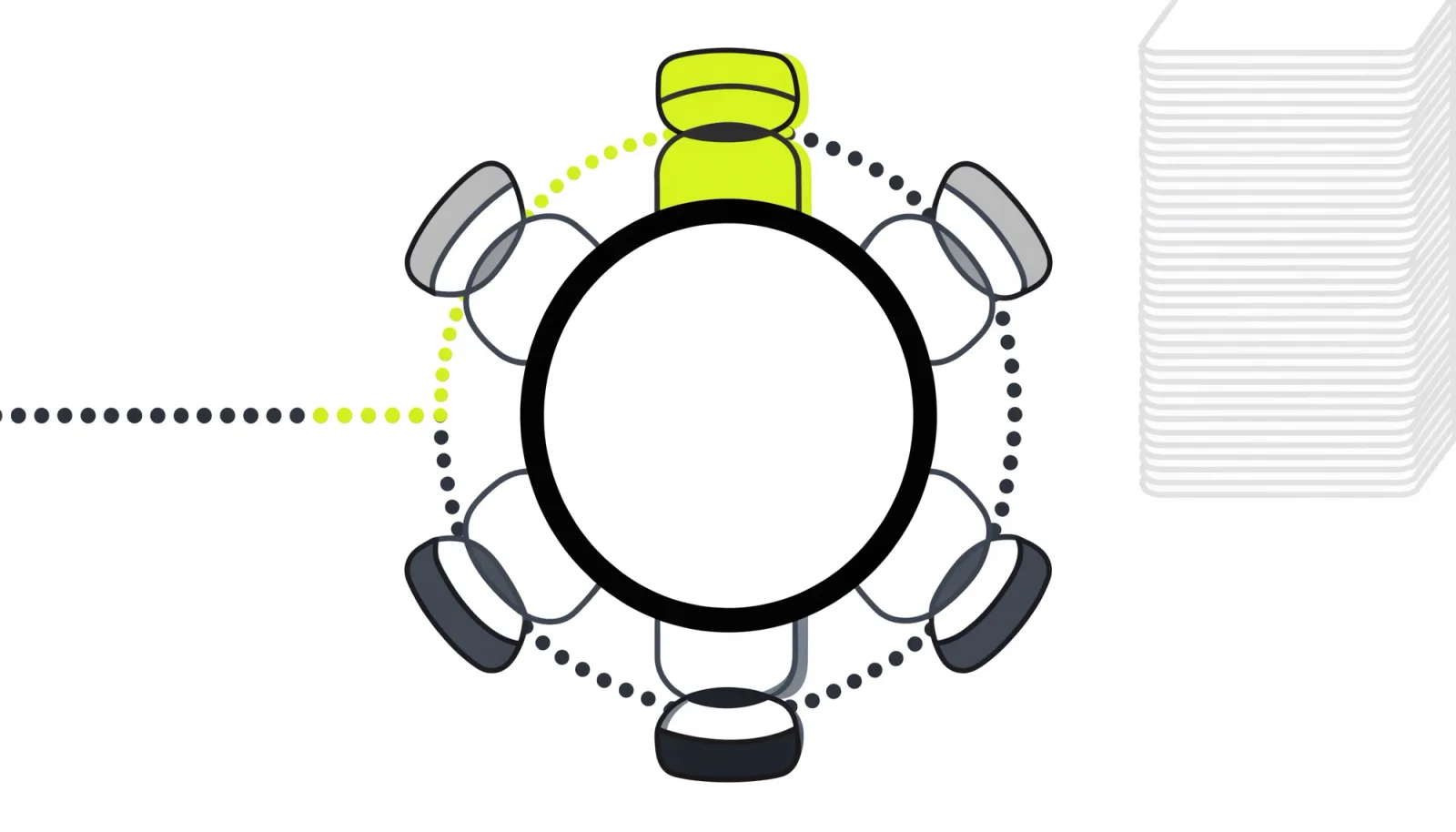
external influencers shape a typical buying decision, beside 13 internal stakeholders
Forrester, 2026of 127 hospital executives named colleagues among the sources they trust most
American Hospital Association, 2024Cold outbound isn’t dead, but more volume is the wrong fix
Cold outbound still opens doors above €25k ACV. What stops working is the same sequence sent to more people. Take a team that sent 4,000 cold emails to CIOs and CFOs in a year and booked 6 meetings.↗ It’s an Illustrative case, built from a buyer’s question. That is 0.15%, or 1 meeting for about every 667 emails.↗ Doubling the volume at that rate buys about 6 more meetings.↗ In a finite market, most of the new emails land with people who already chose not to reply.
The executives usually tell you why. When they say they only take meetings through peers or a reference customer, they are describing how they buy. In 6sense’s 2025 survey of nearly 4,000 B2B buyers, with a median purchase of $200–300k, 79% said they, not the vendor, started the first conversation.↗ The vendor they contacted first won about 80% of the time.↗ So we think outbound’s job at this deal size is to make you a vendor they would call, through people they already trust.
Those people sit around the buying group as well as inside it. Forrester counts 13 internal stakeholders and 9 external influencers in a typical buying decision.↗ Its release doesn’t say who the outsiders are. In our experience they include peers at other buyers, advisers and reference customers, and each can open a door that a cold email can’t.
A typical buying decision has 9 outside influencers as well as 13 internal stakeholders.
Data behind this chart
| Item | Value |
|---|---|
| Internal stakeholders | 13 |
| External influencers | 9 |
Some markets close the cold channel anyway. In Germany, advertising email needs the recipient’s prior express consent, with a narrow exception for existing customers.↗
Plan the path into each seat before the first touch
An entry plan decides, for each target account, which seat you approach first, who opens each door and when every deciding seat is engaged.↗ Write it before anyone sends a first touch. The order of the seats is most of the plan.
Start with 3–5 required seats per account tier.↗ They usually include the seat that owns the problem, the budget owner, an IT or security seat and any seat that can veto in your market. A seat is a role, so 10 people from IT still count as 1 seat.↗ Keep the list to accounts your team has time to research and work seat by seat.
The first seat is the one that owns the problem you solve and feels it every week. It is rarely the most senior title. That person can describe the problem in their own numbers, test your claim and introduce you upwards with a reason to listen.
Every seat then gets a door-opener. Prefer them in this order:
- a leader at a customer of yours who holds the same role
- a peer from the seat’s own network
- your champion inside the account, once you have one
- your own executive, for an executive seat
In Gong Labs’ analysis of 10,332 deals, CxOs were the least-used of 4 seller-side roles but correlated with the highest win rate.↗ Where no door-opener exists, the fallback is a written first touch from a named person, with a reason that holds for that account.
With no customers yet, ask advisers, investors and former colleagues who held or sold to that seat to introduce you. A design partner whose pilot has a success test agreed upfront then becomes your first reference.
Each seat also gets a single owner on your team, a small first ask and an engage-by date. The ask is about a single problem: a 20-minute call with a peer gets further than a demo request.↗ The budget owner is engaged before the business case, so the case is built on their measure. IT security is engaged at discovery, because a review opened after the verbal yes delays the signature.
- 01Step 1
Cut the list to accounts you can work
Keep the accounts that fit and that your team has time to research, map and work seat by seat.
- 02Step 2
Name 3–5 required seats per tier
The seat that owns the problem, the budget owner, an IT or security seat and any seat that can veto. A seat is a role: 10 people from IT are 1 seat.
- 03Step 3
Find a door-opener for every seat
A customer’s leader in the same role, a peer from the seat’s network, your champion, then your own executive for an executive seat. Write cold only where none exists.
- 04Step 4
Give each seat an owner, an ask and a date
A single owner on your team, a small first ask about a single problem and an engage-by date: the budget owner before the business case, IT security at discovery.
- 05Step 5
Qualify on engaged seats and review weekly
Qualified means at least 3 required seats engaged, the budget owner among them, and a dated security review. Track seat coverage every week.
Then the threads run in order. The door-opener introduces the first seat. The first seat introduces your executive to the budget owner. Your security lead opens the review in parallel. Leaving those introductions to the champion leaves them to chance.
An account is qualified when the deciding seats are engaged
An account counts as qualified when at least 3 required seats are engaged, including the budget owner or their direct report, and the security review has a start date.↗ Engaged means a two-way exchange with the seat’s holder in the last 90 days: a call, a meeting or a written reply to a question you asked.↗ Opened emails, accepted connection requests, webinar visits and the champion’s report don’t count.↗
- At least 3 required seats engaged in the last 90 days
- The budget owner or their direct report among them
- A start date for the security review
- Engaged means a call, a meeting or a written reply to your question; opened emails and the champion’s report don’t count
Our GTM audit uses the same floor to separate multi-threaded deals from single-threaded ones: it scores the share of open deals with 3 or more engaged contacts.↗ Coverage is engaged seats divided by required seats, per account and per open deal, reviewed every week.↗
The gate changes what a first meeting is for. A deal that fails it stays at an early stage with a single task: the next seat’s introduction, with a date.↗ A single keen VP can no longer fill the forecast alone.
In our experience, the coverage report shows 2 gaps first: a first seat engaged with no route to the budget owner, and a budget owner met once with nobody on your side who owns the follow-up.
Measure the path as well as the result, with 3 numbers recorded as a baseline before you change the motion:
- the share of first meetings that came through a door-opener
- the days from a first meeting to the budget owner’s first two-way exchange
- seat coverage on target accounts and open deals
Sequencing the seats in practice: a health system example
Here is the plan for a fictional vendor of denial-prevention software selling to US health systems, with Illustrative dates.↗ By Panelhop’s estimate, such deals run 6–24 months through a panel of 5–12 people, and the VP Revenue Cycle usually holds the budget.↗ Finance, compliance, IT and security can each stop the deal.↗
The market is finite. AHRQ’s 2023 compendium counts 639 US health systems.↗ In AHA’s 2024 survey data, 3,567 of 5,121 US community hospitals belong to a system.↗ If the 4,000 emails above went to system-level CIOs and CFOs, they reached about 1,300 people some 3 times each.↗ More volume means a fourth email to the same people.↗
Executives who say they meet vendors only through peers, CHIME contacts or a reference hospital mean it. In an AHA survey of 127 hospital executives, 79% named colleagues among the sources they trust most when exploring products and services.↗
So the vendor cuts its list to the systems that fit its EHR, size and denial problem, and starts with the revenue cycle seat. That seat is usually held by a vice president. Becker’s counted 2 chief revenue officer appointments by late September 2026, down from 9 a year earlier.↗ Most of the 39 revenue cycle moves it reported were at vice president, associate vice president or executive director level.↗
The vendor has 3 customer hospitals whose revenue cycle leaders are active in HFMA, the Healthcare Financial Management Association.↗ It asks each leader for introductions to peers at listed systems, with a short note to forward that names a single problem and, with permission, that customer’s result. The first call is a peer call, and the customer speaks first.
| Seat | What it cares about | Who opens the door | First ask | Engaged by (Illustrative) |
|---|---|---|---|---|
| VP Revenue Cycle, the first seat | Denials, days in accounts receivable, payer downcoding | A customer’s revenue cycle leader, through HFMA | A 20-minute peer call about a single denial type | Week 2 |
| CISO or privacy officer | Security evidence, the business associate agreement, how AI uses patient data | Your security lead | Start the security review and the agreement | Week 3, at discovery |
| CIO or EHR applications director | Fewer platforms, fit with the EHR, the interface queue | Your solutions lead, introduced by the VP Revenue Cycle | Agree the integration scope | Week 4 |
| CFO or VP Finance | Hard-dollar payback against the return hurdle | Your CEO, introduced by the VP Revenue Cycle | Agree how the business case is measured | Week 6, before the business case |
| Chief compliance officer | An audit trail behind every automated claim change | Your product lead, with the HIM or coding director | Review the audit trail | Before the evaluation ends |
Finance hears hard dollars early. Among providers and payers with formal return thresholds, the most common hurdle is 3.0–3.9× the investment.↗ Expect the CIO to ask why not the EHR’s own module: Epic users show a strong preference for EHR-native tools.↗ If the software handles patient records, HIPAA lets the hospital share them only under a business associate agreement.↗ So the security review and that agreement open at discovery.
Fewer accounts worked seat by seat beat a longer list
We think a tighter list of well-fit accounts, each worked seat by seat, produces more pipeline above €25k than a large database that gets the same sequence. That is our view from how these deals are built, not a measured result.
Introductions are scarce. A customer leader will make a handful for you, and your executives can take only so many calls. Spread across every account in a database, they vanish. Spent on the accounts that fit best, they open first seats.
In our experience, more volume treats a design problem as a volume problem. When nobody plans the second and third seat, more first touches only make more single-threaded meetings that stall. Multi-threading is where win rates move: Gong found it lifts win rates by an average of 130% on deals over $50k.↗ Ebsta and Pavilion found win rates rose by 55% when decision-makers were actively involved in the first 2 stages.↗ Neither happens by default, because reps stay with the contact they know.
Buyers at this price also notice a sequence. A reviewed note from a named person, with a reason that holds for that account, keeps the trust a six-figure sale needs. A fifth templated email spends it.
We don’t say outbound never works, or that every account needs a warm introduction before anyone writes. A cold first touch with a specific reason, from the person who will own the account, still opens some first seats. We say the plan comes first, and volume is the wrong lever when the block is the path.

In practice
How we do it at Panelhop
In a Panel Check (GTM audit · 2–3 weeks) we score buying-group coverage from your CRM data: how many required roles are engaged on each target account, and the share of open deals with 3 or more engaged contacts, as a baseline.↗ The Leak Fix buying-group module (we build the fixes) then puts the role map per tier, the coverage measure and a task for each missing seat into your HubSpot or Salesforce.
Signal Desk (in-market accounts, weekly) delivers each account with its buying group mapped against your tier’s seats and the gaps marked. AI drafts the research; your rep owns and sends every first touch.
Questions buyers ask about this
We sent 4,000 cold emails to hospital CIOs and CFOs and booked 6 meetings. Is cold outbound dead for health systems?
No, but more volume won’t fix it. If those emails went to system-level executives, each has already heard from you about 3 times on average, so cut the list to the systems that fit, find a door-opener for each first seat and keep cold notes for the accounts where none exists.
How do we get a first meeting with a VP Revenue Cycle who ignores cold email?
Ask the revenue cycle leaders at your customer hospitals to introduce you to peers they know, for example through HFMA, and give them a short note to forward. Make the first call a peer call about a single problem, with your customer speaking first.
We’re a 20-person startup with no reference customers. Who do we contact first at a health system, and in what order?
Start with the leader who owns the problem you solve, and offer a design-partner pilot with a success test agreed upfront. Ask advisers, investors and former colleagues who know that seat to introduce you. Then open the security review in the first month, bring in finance before the pilot’s business case and leave procurement for the contract.
How many engaged seats make an account qualified?
We count an account as qualified with at least 3 required seats engaged in the last 90 days, including the budget owner or their direct report, and a start date for the security review. Opened emails and the champion’s report don’t count as engagement.
What if nobody can introduce us to an account?
Send a written first touch from the person who will own the account, with a reason that holds for that account, where the law allows it. If it gets no reply, move the account down a tier until a signal or an introduction appears, instead of adding it to a sequence.