Blog · Pharma and life sciences
Account scoring: a buyer that steers other buyers needs 2 scores
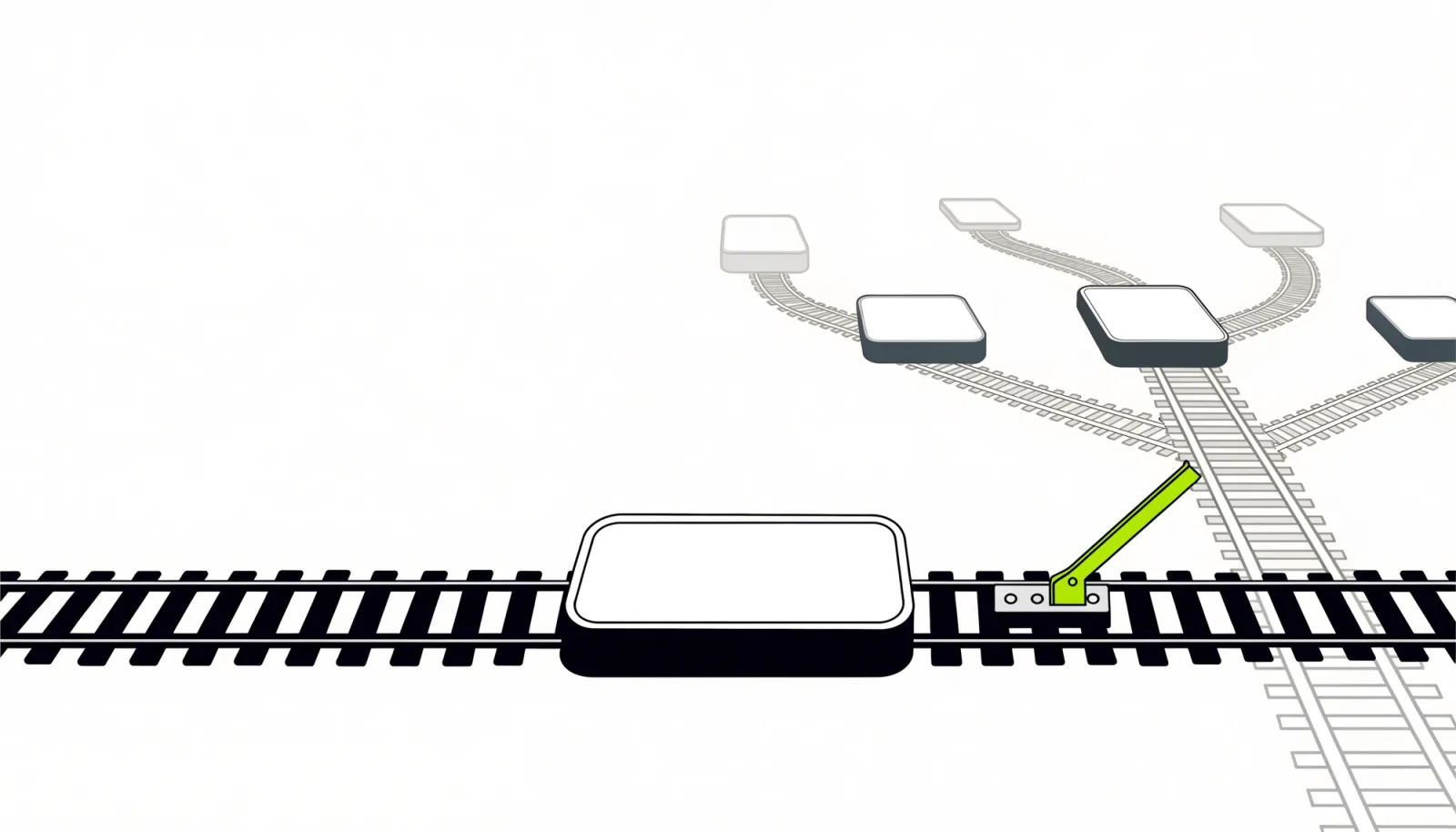
Score an account that buys and steers other buyers once per role, tier it on the pair and qualify it only when its buying group engages on both sides.
of 4 mid-market clinical trial software vendors use CRO partnerships to reach sponsors
Panelhop, 2026people plus the CRO in a small biotech sponsor’s buying group, by Panelhop’s estimate
Panelhop, 2026One account score hides a buyer that also steers other buyers
A single account score blends 2 relationships into 1 number, so the strong role hides the weak one. The account pays you for its own use. It also shapes which of its clients buy from you. Each role has its own people, evidence and play, so each needs its own score.
Outside voices are a normal part of buying. Forrester’s 2026 survey counts 9 external influencers in a typical buying decision, beside 13 internal stakeholders.↗ When one of those outside voices is also your customer, a model built for single buyers can’t see what the account is worth.
A typical buying decision now includes 9 external influencers beside 13 internal stakeholders.
Data behind this chart
| Item | Value |
|---|---|
| Internal stakeholders | 13 |
| External influencers | 9 |
The pattern turns up in many markets above €25k ACV. A systems integrator runs your software and recommends it to its clients. A device maker builds in your component and steers its customers’ choice. A CRO licenses your clinical data and influences which sponsors use it. Vendors already sell through such accounts. In our October 2026 analysis of 13 vendors’ websites, 2 of the 4 mid-market clinical trial software vendors use CRO partnerships as a route to sponsors.↗
Today’s AI answers to this question get halfway. They propose a buyer score and an influence score, then combine them into one priority. None of them says who to reach on each side, or when the account counts as qualified.
Short target account lists beat long lists of logos
We think a short list of accounts that buy and steer produces more pipeline than folding them all into the main target account list. Each account on it is scored and mapped on both roles. We have 3 reasons.
Rep time is the scarce input. An account worked on both sides needs people mapped on each, so it costs more effort than a plain customer. Spread across every logo in a segment, that effort thins to one contact per account.
A tighter list also scores better. Every marginal account adds noise to the weights you later learn from won and lost deals.
And one engaged contact isn’t a qualified account. At this deal size the buying group decides together. In Gong’s analysis of 1.8M deals, multi-threading lifted win rates by 130% on average in deals over $50k.↗ A logo folded into the general list tends to get the one thread a rep finds first.
We don’t give a right list size. It depends on how many accounts your sellers can work on both sides, and the scores decide which accounts make the cut.
Score ICP fit for each role, then tier on both scores
Score each role against its own fit criteria, then set the tier from the pair of scores, never from their total. Buyer fit asks whether the account would pay you for its own use. Influence fit asks whether it can move its clients to you. They share almost no criteria, so they can’t share a number.
| Score | Criterion (Illustrative weights) | Points |
|---|---|---|
| Buyer fit | Uses what you sell in its own work | 30 |
| Buyer fit | Works in the areas your product covers | 25 |
| Buyer fit | Runs enough work of its own to justify a deal of your size | 20 |
| Buyer fit | A named budget owner and a current contract ending within 12 months | 15 |
| Buyer fit | Can accept your security and data terms | 10 |
| Influence fit | Most of its clients are small or mid-size and take its advice on tools | 30 |
| Influence fit | Runs many client projects in the areas your product covers | 20 |
| Influence fit | Brings technology partners into its bids or keeps a partner list | 25 |
| Influence fit | Dated evidence that it steered a client’s choice in the last 12 months | 25 |
| Each score | Out of 100; a role fits at 60 or more, and the tier comes from the pair | 100 |
The weights are an illustration and a starting point. Replace them with weights learned from your own won and lost deals once each role has 10 or more closed deals behind it. A role fits at 60 points or more, and the pair sets the tier:
- Both roles fit: Tier 1, worked on both sides
- Only the buyer role fits: Tier 2, worked like any customer
- Only the influence role fits: Tier 2, worked as a partner
- Neither fits: Tier 3, with nobody named until a buying signal arrives
Then size Tier 1 to what your team can hold. Every Tier 1 account needs both sides worked, so raise the threshold if Tier 1 outgrows your sellers and partner managers.
The total misleads because it hides which side is weak. In the illustration, account C scores 65 as a buyer and 70 on influence, and account D scores 95 and 40. Added up, both make 135 and rank side by side. On the pair, C is Tier 1 and needs both sides mapped, while D is a Tier 2 buyer where partner time is wasted.
Score influence on evidence you can date, never on the length of the client list. An account with a long client list that never steers a choice is a weaker channel than a smaller one that brings partners into its bids. Influence isn’t control, either: the client still decides, and the account shapes the choice. So count what the account did: a bid that named you, a client it introduced or a place on its partner list. For an account you don’t sell to yet, use public evidence: partner pages, announced partnerships and the clients it names. Mark that score inferred until your own evidence replaces it.
Map the buying group on each side of the account
Each role has its own buying group, so map both: the people who approve the account’s own purchase, and the people who recommend vendors to its clients. Name the seats on each side, meaning the roles you need engaged, before the first touch.
The buyer side holds the seats any customer has: the budget owner, the people who would use what you sell, procurement and the security and data-protection lead.
The influence side holds the people who face the account’s clients:
- business development and proposal leads, who write the bids
- the owner of the preferred-partner list
- project or practice leads, who advise clients as the work starts
Give every seat on both sides an owner on your team and a date to engage it by. On smaller deals one seller can often hold both sides; on larger ones, give each side its own owner, such as the account executive and a partner manager. One person can also sit on both sides: a vendor management director, say, who signs the account’s own contracts and keeps its partner list. Count that person on both maps, but never let a side qualify on them alone. When a client’s deal runs through the account, add its influence-side people to that client’s buying group as well.
One friendly contact shouldn’t make the account look qualified
Qualify each side only on engaged people, so one friendly contact can’t make the account look qualified. Engaged means a two-way exchange with the person in the seat in the last 90 days: a call, a meeting or a written reply to a question you asked.↗ Opens, downloads and webinar views don’t count.
Set the bar for each side:
- Buyer side: at least 3 of 4 required seats engaged, the budget owner or their direct report among them
- Influence side: at least 2 of 3 required seats engaged, plus one piece of dated evidence from the last 12 months
This is where one blended score fails most. A user who downloads your sample, joins your webinars and answers every email can lift a single engagement score to the top of the list. Counted by side, that is 1 of 4 buyer seats and 0 of 3 influence seats: qualified on neither. In pipeline reviews, show each side’s count beside the account, so a manager sees which side to work next.
Credit influence where it shows: on the client’s deal. Give every client opportunity an ‘Influenced by’ field that names the steering account and the evidence. Report that pipeline on the steering account beside its own revenue, never added into it, so no deal is counted twice. Re-score both roles each quarter by a written rule. Re-score at once when the evidence changes, such as a new partner programme, a new leader in one of the seats, a won or lost bid or an acquisition.
Account scoring worked through for 40 CROs that license data
In an illustration, a fictional vendor’s 40 CROs come down to 18 accounts worth working, with 83 named seats between them. First, who sits on each side at a CRO.
Panelhop’s pharma research finds that contract research and manufacturing organisations buy systems for their own work and steer which tools small sponsors use.↗ On the influence side, Indero’s senior director of biometrics, Éric Hardy, says in a Veeva blog post that the CRO’s business development team “works closely with” sponsors “to understand their preferences of the proposed technology”.↗ Panelhop’s eClinical research adds the CRO clinical systems lead, often a senior director of clinical systems, who worries about recommending a system its staff can’t run.↗ Hardy also marks the limit: “ultimately, the choice lies with the sponsor”.↗ By Panelhop’s estimate, a small biotech sponsor’s buying group has 3–5 people plus the CRO.↗
The vendor licenses clinical trial benchmark data at about €80k a year and scores its 40 CROs like any pharma logo, on headcount and revenue band, with 1 or 2 contacts at each. Rescored on the sheet above, they split into 4 groups:
| Tier (Illustrative) | Rule | CROs | Seats per CRO | Named seats |
|---|---|---|---|---|
| Tier 1: buys and steers | Both scores 60 or more | 6 | 4 buyer + 3 influence | 42 |
| Tier 2: buyer | Buyer fit 60 or more only | 5 | 4 buyer | 20 |
| Tier 2: influence | Influence fit 60 or more only | 7 | 3 influence | 21 |
| Tier 3 | Neither score 60 or more | 22 | None until a buying signal | 0 |
| Total | 40 | 83 |
Tier 1 needs 7 seats at each of 6 CROs, 42 in all (6 × 7). The Tier 2 buyers need 4 each, 20 in all (5 × 4), and the Tier 2 influencers 3 each, 21 in all (7 × 3). That makes 83 named seats across 18 CROs (6 + 5 + 7), where the old model worked 40 logos through 1 or 2 contacts. The other 22 wait in Tier 3 until a buying signal moves them.
At one Tier 1 CRO, the old model marked the account hot because a biostatistician downloaded the sample and replied to emails. Counted by side, that is 1 of 4 buyer seats and 0 of 3 influence seats, so the plan dates each missing seat:
- 01Week 0
Rescore both roles
Illustrative: buyer fit 70 and influence fit 75 make the CRO Tier 1. Engaged: the biostatistician only, 1 of 4 buyer seats and 0 of 3 influence seats.
- 02By week 2
Reach the budget owner
The biostatistician introduces the head of feasibility, who owns the data budget. Owner on your side: the account executive.
- 03By week 4
Open the influence side
Your partner manager meets the CRO’s director of vendor management, who keeps its preferred-partner list.
- 04By week 8
Qualify the buyer side
Procurement joins the licence review: 3 of 4 buyer seats engaged, the budget owner among them.
- 05By week 12
Qualify the influence side
A proposal lead names your data in a sponsor’s bid defence: 2 of 3 influence seats engaged, with dated evidence.
The buyer side qualifies in week 8. The influence side follows in week 12, when a proposal lead names the data in a sponsor’s bid defence, the meeting where a CRO pitches its proposal before the award. A quarter later, a sponsor opens a €60k opportunity with this CRO in its ‘Influenced by’ field. The CRO’s record shows €80k of its own licence beside €60k of influenced pipeline, never €140k.
The same sheet fits a connected drug-delivery device vendor: score twice any device platform maker or CDMO that buys from you and also shapes which device a drug maker’s combination-product team picks.

In practice
How we do it at Panelhop
Panelhop is an account-based marketing (ABM) and GTM consultancy for B2B companies selling deals of €25k or more. In a Panel Check (GTM audit · 2–3 weeks), we draft your ICP and tiers from your own closed-won and closed-lost deals. Where an account both buys from you and steers other buyers, we score it on each role and set its tier from the pair.
Leak Fix (we build the fixes) puts the tiering and buying-group coverage into your CRM: the required seats on each side and the engaged people counted per side. Signal Desk (in-market accounts, weekly) then delivers scored accounts with their tier, a buying-group map and a brief, and Panel Ops (we run it monthly) re-tiers the list each quarter. The scoring sheet above works with us or without us.
Questions buyers ask about this
Should we add the buyer score and the influence score into one account score?
No. Added up, an account that is strong on one role and weak on the other ties with one that is middling on both, and they need different plays. Keep both scores, set the tier from the pair and sort accounts within a tier by the score of the role that tier works on.
How do we credit a CRO for the sponsor deals it steered without double counting?
Add an ‘Influenced by’ field to each sponsor opportunity that names the CRO and the evidence, such as a bid that named you or an introduction. Report that pipeline on the CRO’s account beside its own licence revenue, never added into it. Count only opportunities with dated evidence, never the CRO’s number of sponsors.
How do we score a CRO’s influence before it has sent us a single sponsor?
Score it from public evidence you can date: the share of small and mid-size biotechs among the sponsors it names, its studies in the therapeutic areas your data covers, a published technology partner programme and bids where it brought a vendor in. Mark the score as inferred, and replace it with your own evidence, such as introductions and bids that name you, as it comes in.
Where do the 2 scores live in our CRM if we keep one account per logo?
Keep one account record and add 2 score fields, a tier field set from the pair and a side field, buyer or influence, on each contact role. Engaged contacts are then counted per side, and each client opportunity carries an ‘Influenced by’ field that names the account.
Is there an agency or consultant that builds target account lists for companies selling connected drug-delivery devices to pharma combination-product and device development teams?
Yes: some ABM and GTM consultancies do, Panelhop among them, for B2B companies selling deals of €25k or more. A useful list starts from programmes, such as drug makers moving an injectable or inhaled product to a self-administered or connected device, and names the device development, human factors, combination-product quality and regulatory people at each tier. Device platform makers and CDMOs that buy from you and also shape a drug maker’s device choice get a score for each role, as this post sets out.